Ethnography and design thinking to improve system design by 97%
Barcode Tracking System - Connecta Corporation
Summary:
At Connecta Corporation, a precision machining and manufacturing firm, I was responsible for both shipping coordination and internal workflow optimization. Our department handled everything from incoming raw materials to final-stage quality control and shipment. I used ethnographic research and design thinking to design and implement a barcode-based part-tracking system that cut search times by 97%, from nearly an hour to just two minutes—transforming daily operations across the entire shop.
-
Before this project, every job was documented only on paper “routers.” Parts routinely disappeared between departments, forcing supervisors and logistics staff to wander the floor searching for them.
In peak production periods, tracking a single part could take 40 minutes to an hour, delaying shipments and creating widespread frustration. Because I was often the one tasked with physically locating missing parts, I decided to engineer a simple, digital solution that anyone on the floor could use immediately.
-
To map the workflow, I shadowed machinists, QC technicians, and managers, documenting every stage a part passed through—from quote creation to final shipment.
The typical process included:
1. Router creation and material pull
2. Machining on numbered Swiss lathes
3. Optional heat-treating, painting, or milling
4. Quality-control measurement stations
5. Pre-pack or shipping
Conversations with staff revealed two major pain points:
- Reliance on memory and handwritten notes that became outdated daily.
- No shared visibility into which station currently held each part.
These insights clarified that the best solution needed to be fast, universal, and foolproof.
-
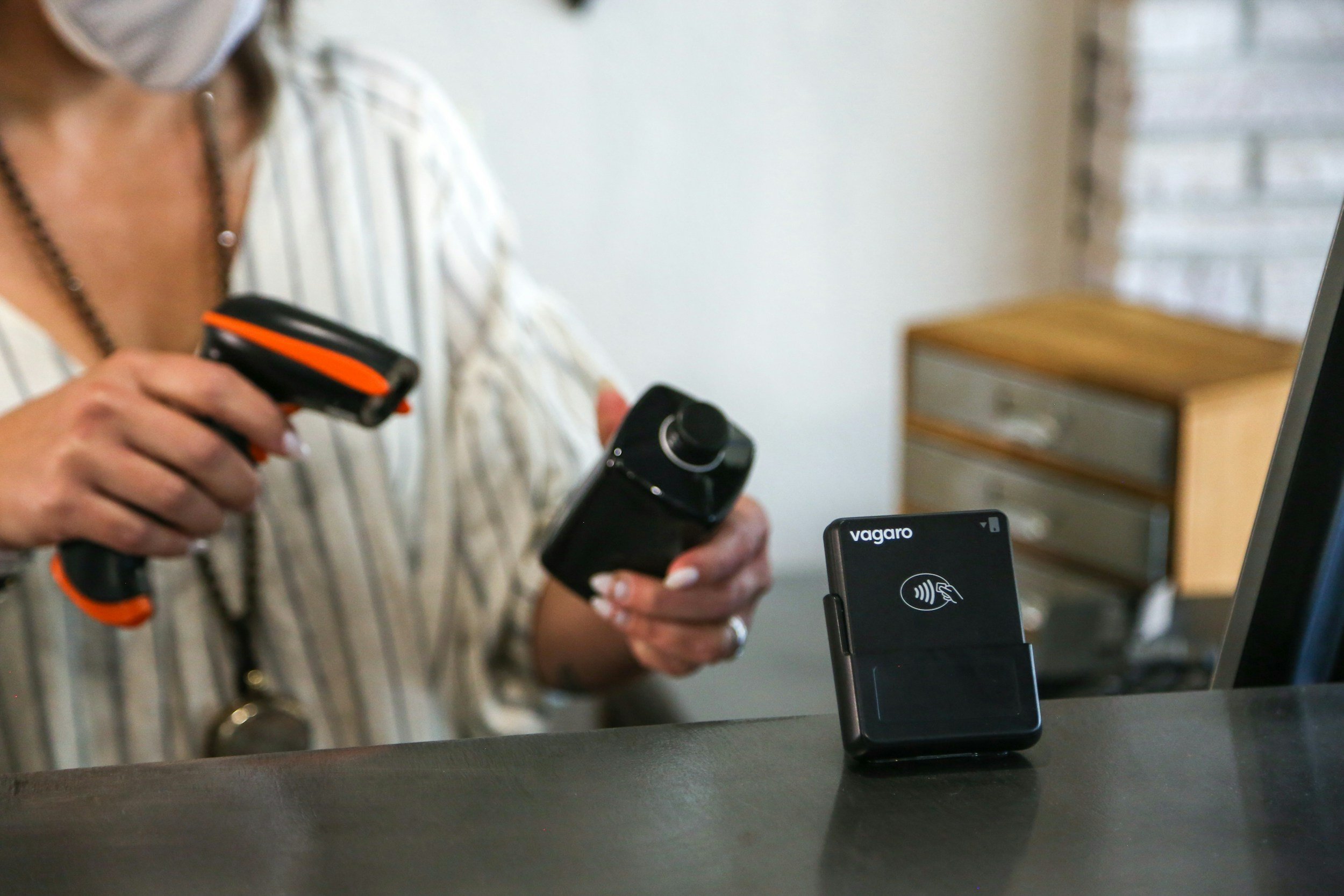
My design philosophy was “user-centered and accessible.” I chose tools the team already understood—Excel, a barcode scanner, and printed labels.
-
1. Labeled each workstation with a unique QR code.
2. Printed barcodes for every job router.
3. Each morning, scanned the workstation first, then every part located there.
4. Excel automatically logged part numbers under their corresponding stations.
5. Organized and formatted the data for easy, shared reading at my desk.
After a successful rollout, we upgraded to Honeywell touchscreen scanners and label makers to streamline data entry and router labeling even further. The system required minimal training; everyone could access and interpret the spreadsheet.
-
- Search time reduced: from 40 minutes → 2 minutes.
- On-time delivery improved significantly during high-volume periods.
- Morale boost: staff no longer wasted hours hunting parts.
- Longevity: the system remained in use after my departure.
- Supervisors and machinists called it a “game changer,” and management invested in additional equipment to scale the process.
-
This experience taught me how to identify root-cause problems through observation, design simple yet effective systems, and iterate quickly based on user feedback.
In hindsight, it was my first foray into user-experience and design thinking—an exercise in creating a workflow that minimized cognitive and physical load. If I revisited the project today, I’d design a lightweight custom database or dashboard to visualize part locations in real time, making the interface as intuitive as the system itself.
-
Process mapping & workflow design
Human-centered problem solving
Data organization & information architecture
Systems thinking & iterative improvement